
Siripaca Greenhouses, Mandatory Meeting
 Early this week Jeff went to La Paz to meet Pastor Orlando Moller, a citizen of the U.S. and Bolivia, who’s here to lead a three-day seminary course for Titicaca-area pastors and church leaders.
While Jeff was away I attended an emergency meeting that ran two hours longer than expected. So Pastor Juan Paz, Fausto, who’s a leader in one of the church plants out on the peninsula, and Pastor Dionisio, newly assigned here to help Pastor Juan, and I were late getting out to visit four rural sites – two schools seeking mission funds to help re-roof an existing greenhouse and build a new one, and two existing greenhouses to ensure there’s reinvestment and proper use of profits. Heavy morning rains had flooded some mountain roads, so it was hard to find a taxi driver willing to take us.
We arrived at the first site, the village of Siripaca, three hours late. The rains had made some of the mountain paths impassable for some of the school board members. But nine of them greeted us warmly and enthusiastically. At meetings such as this, “important” people make at least one speech. Mine was embarrassingly short, but delivered partly in Aymara. The school director, speaking in Spanish, said that although the village is geographically hard to reach, it’s not isolated. No one is isolated. He said “We are all pasajeros (travelers) in life. God wants us to help each other and live in harmony.”
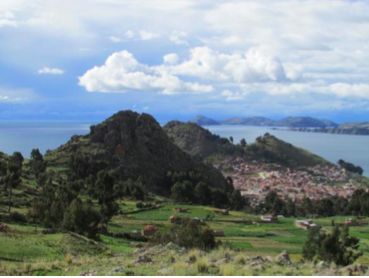 Friday afternoon we knocked off work early, grabbed the camera, and left home at little after 4, aiming to hike a pre-Columbian road winding through a mountain pass above Copacabana. Such magnificent sites just had to be shared ...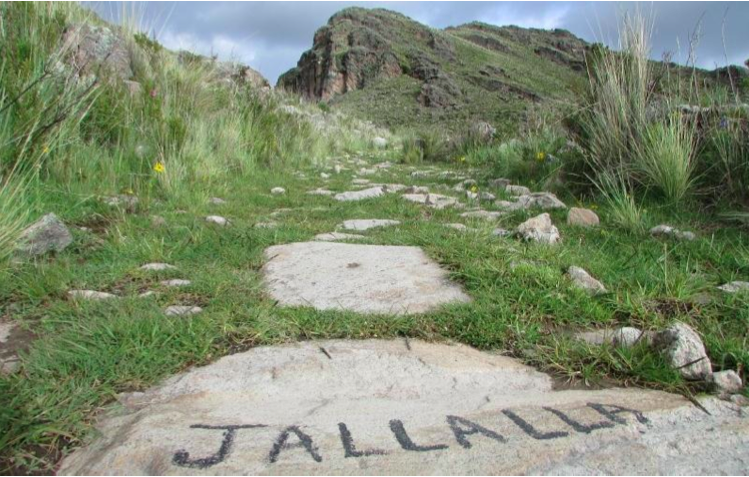
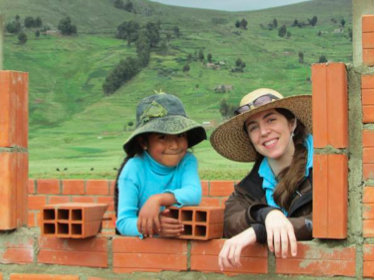 Katie Yaun, a new UMVIM volunteer, has been visiting for the past 10 days, meeting neighbors and people she’ll be working with, and scouting out the area in advance of her long-term move here in several more weeks. Katie will be working with Misión Fronteras for about 9 months, launching and directing the new Teach the Teachers Program to improve English language skills throughout the region.
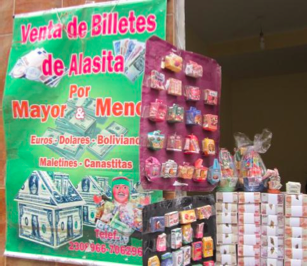 Jan. 24 marked the beginning of “Alasitas,” a three-week long Andean festival celebrated by Bolivia’s indigenous Aymara tribe.
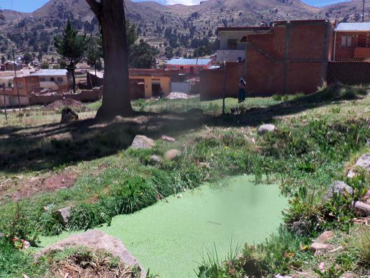 It’s been a weird week, and I suppose that’s heightened our sense of gratitude.
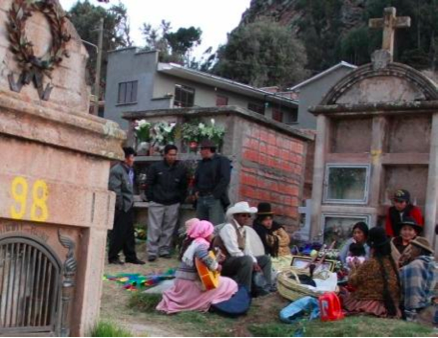 On Nov. 1, All Saints Day, Bolivianos party with the souls of their lost loved ones. Days prior to the fiesta street markets teem with 50-kilo bags of flour and sugar, buckets full of lard, and tables and blankets spread with myriad, hand- painted, miniature plaster-of-Paris faces. Families use these to make “Tantawawas,” Aymara for Bread Babies. The term refers generally to the many, many, shaped bread loaves -- those decorated with human faces symbolize the dead; others formed like horses, ladders or stairs are meant to help transport the spirits from heaven. Since most families don’t have an oven, they either buy bread or make dough and rent oven time from those who do.
 I haven’t, and as far as I know neither has John Smoke. Unfortunately for us, that is all about to change! You may have heard us engaging in some good-spirited competitive conversations or seen the posters on the church walls with pies surrounding our faces. This Sunday, pies will be thrown. But what’s it all about?